
評估 LiteLLM 時,我們沒有採用的其中一個顧慮,是 Virtual Key 帶來的 Human Identity 管理。幾個月後接 kagent 的 LLM Path,我卻又在 agentgateway 前替每個 Runtime 放了一把 Static Consumer Key。兩邊都是 Bearer Secret,也就是持有這段秘密的人就能拿它發出請求,表面上看起來像是前後矛盾。
差別不在 Key 的形式,而在它代表的對象。把一把 Key 標成值班工程師,平台便要接手登入、MFA、Team 異動、停權、離職、遺失與重發。若它只代表 workload/runtime-a,責任會縮到 Secret Delivery、Rotation、爆炸半徑與 Provider Credential Isolation。前者牽涉 Human Identity Lifecycle,後者處理 Machine Consumer Boundary。
從那次選型以後,我看到 API Key、Virtual Key 或 JWT 時,會先找出它代表哪一種 Actor,以及誰能撤銷它,再判斷是否適合這條路徑。Credential 的外形相似,不代表能承擔相同的身分責任。
Virtual Key 是 Gateway 發給呼叫端的替代 Key,呼叫端不用持有模型供應商的原始 Key。Gateway 可以替不同呼叫端分開預算、流量限制、用量與可用模型,也能把真正的 Provider Credential 留在後面。這些功能正是 LiteLLM 當時進入候選名單的原因。
問題出現在我們把它映射成 Human:
企業 IdP 的值班工程師
    ↓ 另做 mapping
Gateway user / team
    ↓ 發 virtual key
LLM usage / budget / provider access
企業 IdP 原本已經知道值班工程師是否在職、屬於哪個 Team、能否登入,以及有沒有通過 MFA。Gateway Database 再保存一份 Human → User → Team → Virtual Key 後,Offboarding 便多出另一條同步路徑。Team Change、Key 撤銷、UI 或 API 造成的 Drift 都需要 Owner,兩邊資料不一致時還得決定相信哪一份。
Key 上的 user=sre-oncaller 只能證明 Gateway 找到了這筆 Metadata,不能證明值班工程師剛完成登入,也不能證明帳號目前仍有效。產品若另外整合 IdP 或 SCIM,可以補上 Lifecycle。單靠一份 Key Mapping 不會自然得到這項能力。
因此,我們沒有讓 Virtual Key 承擔企業 Human Identity。它仍然能管理用量與 Provider Access,只是 Human Lifecycle 繼續以企業 IdP 為準。
後來串 kagent 的 LLM Path 時,條件完全不同。當時使用的 Runtime Path 接受 API Key,卻不會替平台完成 OAuth Login、取得短效 Token,再處理 Cache、Expiry 與 Refresh。硬把 Human OAuth 塞進去,只會把 Credential Lifecycle 搬進原本不負責這件事的 Runtime。
我們最後留下的是一條單純的兩段式 Credential Path:
kagent runtime
    │ agentgateway consumer key
    ▼
agentgateway
    │ provider key
    ▼
LLM provider
Consumer Key 從頭到尾只代表 Runtime。Audit 記錄 workload/runtime-a,Human 欄位則明確標成 NOT_APPLICABLE。上游若還要知道是哪一位使用者發起請求,就必須另外傳遞可驗證的 Human 與 Delegation Context,不能把 Runtime Key 改名成某位值班工程師。
Static Bearer Key 當然有侷限。它可能被複製,所以 Gateway 無法只憑這枚 Key 辨認是哪個 Pod 送來請求。不過在 Runtime 只接受 API Key 的條件下,它至少能隔離不同 Consumer,避免 Provider Key 散進每個 Agent Deployment。Runtime A 的 Key 外洩時,也不必連 Runtime B 一起撤銷。
如果只是事故調查要定位 Pod,可以在事件裡關聯 Pod UID。若要讓 Gateway 驗證發出請求的是哪個工作負載,則需要它實際接受並驗證的工作負載憑證。ServiceAccount 名稱本身不會做到這點,也未必能區分共用同一個 ServiceAccount 的 Pod。Kubernetes 的 ServiceAccount 文件說明 Token 可綁定特定 Pod。是否採用這類憑證或 SPIFFE,仍要看下游的驗證能力與風險需求。
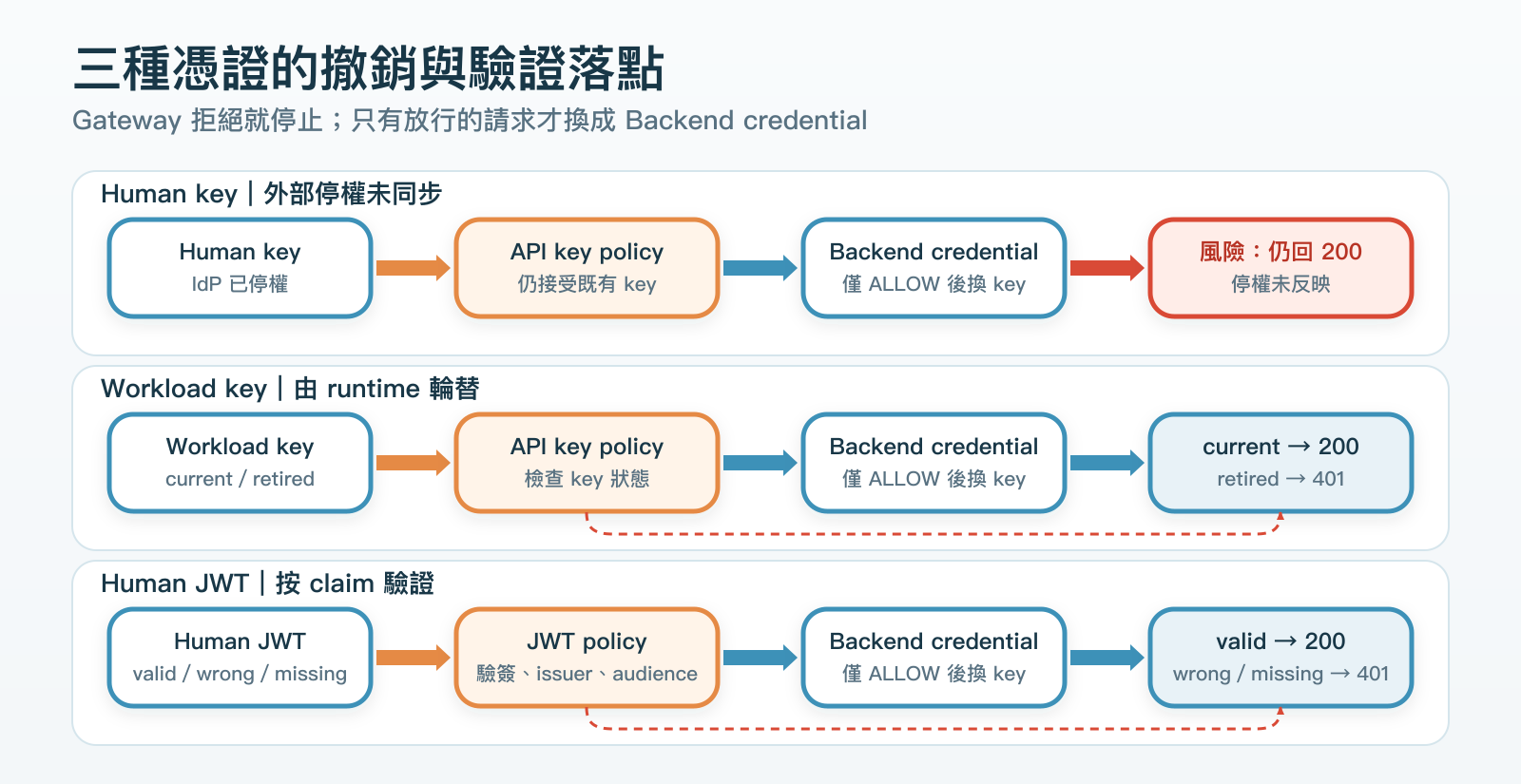
Lab 03 使用一個 agentgateway 與一個 Synthetic OpenAI-compatible Backend,比較 Human Key、Workload Key 與 Human JWT。三種 Credential 都呼叫 /v1/chat/completions,通過入口驗證後,再由 Backend Authentication 換成 Provider Key。
這裡需要先釐清名稱。LiteLLM Virtual Key 是前一篇實務選型的對象,Lab 使用 agentgateway API Key Policy 與 Metadata 重現相同的 Identity Mapping 問題。Consumer Key 是本文為了區分用途採用的名稱,不是 agentgateway 另一種正式 Credential Type。
API Key Route 使用 Strict Mode,兩把 Key 分別映射成 Human 與 Workload Metadata:
apiKey:
  mode: strict
  keys:
  - key: <ephemeral-human-key>
    metadata:
      kind: HUMAN_VIRTUAL_KEY
      human: user/sre-oncaller
  - key: <ephemeral-workload-key>
    metadata:
      kind: WORKLOAD_CONSUMER_KEY
      workload: workload/runtime-a
完整設定放在 agentgateway.example.yaml。讀者重跑時會產生新的測試 Key。下面只看三種入口 Credential 最後讓 Gateway 做出什麼不同決定。
Human Key 的第一個案例把 Directory State 設為 ACTIVE,Gateway 找到 user/sre-oncaller 後回傳 200。第二個案例使用完全相同的 Key 與 Gateway Mapping,只把外部 Directory State 改成 DISABLED,結果仍然是 200。
human-key-active             ALLOW  KEY_MAPPING_ACTIVE
human-key-after-offboarding  ALLOW  STALE_MAPPING_ALLOWED
這份外部 Directory 是合成的停權狀態,沒有與 Gateway 做同步。Gateway 因而沒有收到這次停權事件。它只知道 Key 還在 Allowlist、Metadata 存在,而且 Route 可以繼續走。回應仍是 200,對值班工程師來說卻已經是錯誤授權:人被停用了,用他的名字建立的 Static Key 仍然有效。這比「Key 可以正常發 Request」更直接地說明,Human Identity 不能只靠 Gateway 裡的一份靜態 Mapping 管理。
Workload Key 的結果比較單純。Current Key 得到 200,移出 Allowlist 的 Retired Key 得到 401。這正是我們要它負責的範圍:隔離並撤銷 Machine Consumer。輪替期間如何不中斷服務,還要另設交付流程。
Human JWT 延續 Day 12 的 Contract,包含 iss、aud、sub、client_id、Scope、token_use 與五分鐘效期。Resource 可以透過 JWKS 驗證簽章與 Issuer,再確認 Token 是否發給自己的 Audience。
第一版 Lab 鎖在 agentgateway 1.4.1,當時只測 Valid Token 與 Wrong Audience。發稿 Review 時,我重新閱讀 Release Note,補跑 Missing Issuer 與 Missing Audience,兩個 Request 都回了 200:
agentgateway 1.4.1 review case

jwt-missing-issuer    ALLOW
jwt-missing-audience  ALLOW
這個結果直接改變了文章與 Lab。公開版本升到 Pinned agentgateway 1.5.0,並把 Wrong/Missing Issuer 與 Wrong/Missing Audience 全部加入 Regression Test。官方 JWT Authentication 提供現行設定方式,Release Notes 則記錄了這項版本差異。
jwt-human             ALLOW  JWT_PRINCIPAL_VERIFIED
jwt-wrong-issuer      DENY   JWT_ISSUER_REJECTED
jwt-wrong-audience    DENY   JWT_AUDIENCE_REJECTED
jwt-missing-issuer    DENY   JWT_ISSUER_REQUIRED
jwt-missing-audience  DENY   JWT_AUDIENCE_REQUIRED
升版後,錯誤或缺少 Issuer、Audience 的 Token 都會被拒絕。值班工程師被停用時,已發出的 Access Token 仍可能活到 TTL 結束。Revocation、Session 與 Gateway Cache 需要另行設計。JWT 讓 Gateway 不必自己保存一份 Human Key Mapping,但員工停權仍須由企業 Identity 流程接住。
Human Key、Workload Key 與 Human JWT 通過後,都由同一個 Backend Authentication Policy 注入 Provider Key。agentgateway 的 Backend Authentication 說明 Incoming Credential 通過驗證後預設不再轉送,Gateway 可以改掛 Backend 專用 Credential。
Synthetic Provider 會檢查收到的 Authorization 是否等於本次產生的 Provider Key,也確認它不等於 Human Key、Workload Key 或 JWT。這個實際 Backend Behavior 才能支持「Provider Key 已被隔離」,不能只從架構圖推論。
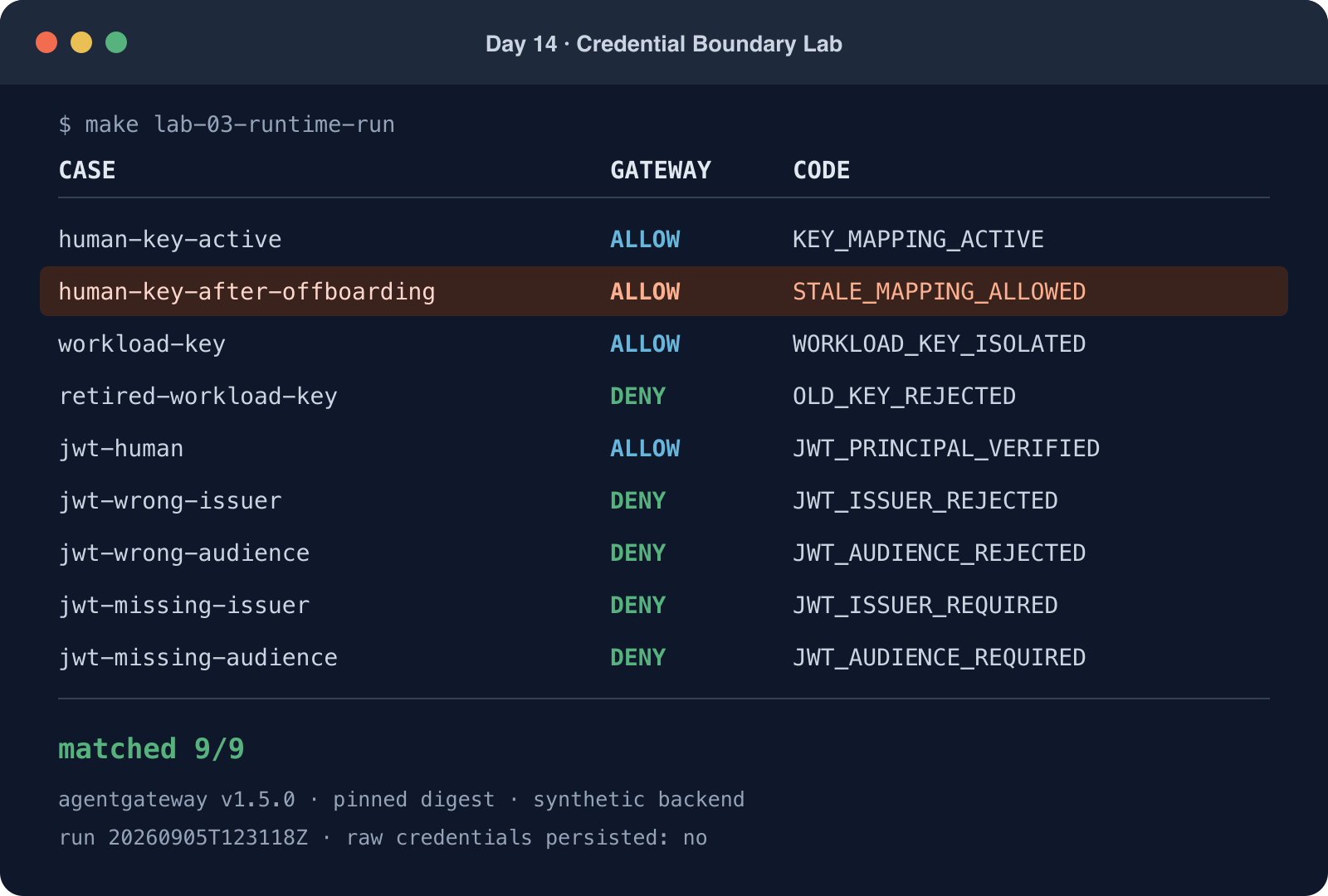
Human Key、Workload Key 與 JWT 的差異,現在可以沿著停權、撤銷與 Provider 收到的 Credential 一路查下去。不必因為三者都能當 Bearer Secret,就交給同一套 Lifecycle。完整結果與重跑方式放在 Lab 紀錄及前面的 Lab README。要帶進架構討論,也有可複製的 Credential Decision Table。
這個 Lab 只比較 Credential Boundary,沒有處理 Static Key 存在 Kubernetes Secret 或外部 Secret Manager、雙 Key Overlap、Hot Reload 與 Rolling Restart。Policy Service 故障時要 Fail Closed 或暫時使用 Cache,也必須由正式環境另外決定。
Agent 代表 Human 行動時,還要把 Human sub、Client、Agent Chain 與 Executing Workload 放進同一份 Audit Event。到了這裡,Human Identity、Workload Consumer 與 Provider Credential 已經能分開處理,不需要再靠一把 Key 同時扮演三個角色。
實務架構仍保留既有 Ingress,下一個問題會轉到 Traffic Path。若 Edge 與 Agent Gateway 同時處理 Authentication、Retry、Header 或 Streaming,剛釐清的 Credential Boundary 又會變得模糊。Day 15 會拆開兩層 Gateway 的責任,同時讓公開 Lab 維持單層 agentgateway,避免讀者為了理解邊界先多除錯一層 Proxy。



 iThome鐵人賽
 看影片追技術